 04 — Blocks
Blocks
A fog-of-war map of New York City. Walk a street and it lights up — explore the five boroughs one block at a time until the city is a place you actually know.
- Role
- Co-founder
- Timeline
- Apr 2026 — Present
- Stack
- React Native · Expo · TypeScript · Supabase
- Site
- nycblocks.com ↗
- App Store
- Blocks NYC ↗
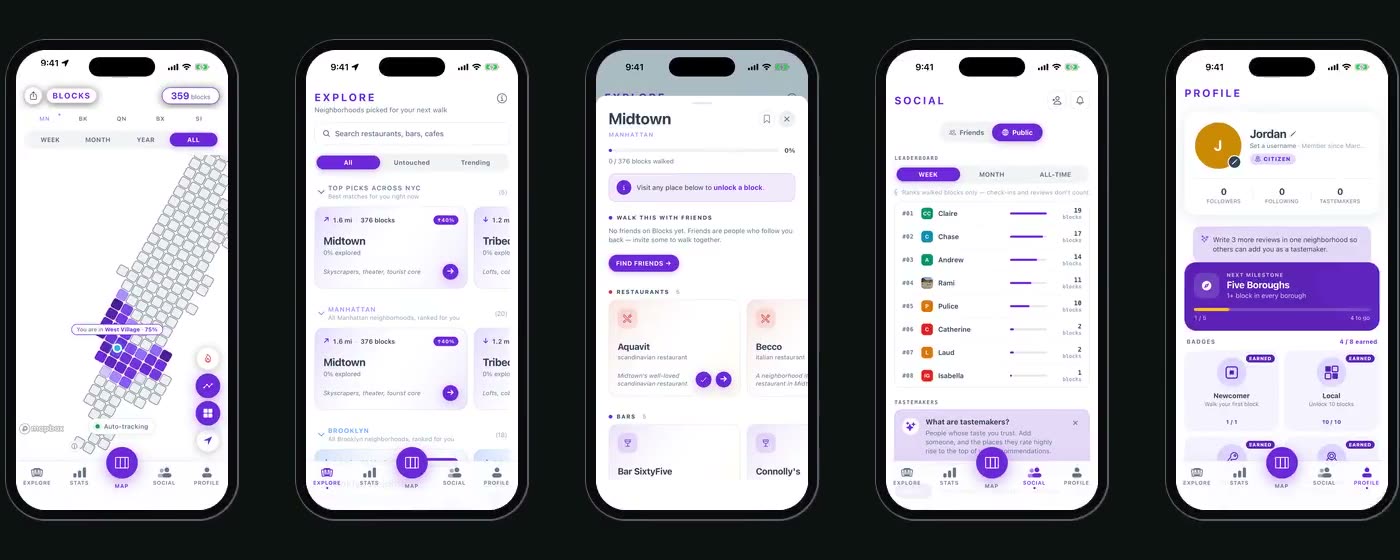
New York has 33,114 city blocks, and most New Yorkers walk maybe five neighbourhoods. Blocks is less a fitness app than a way to actually know the city you live in. It turns walking into progress: every street you cover is permanently recorded, and there's no streak to keep and nothing to lose. Your map only ever grows.
Co-founder on a two-person team. My co-founder focused on business operations and go-to-market; I led the product itself: the design, a significant share of the app development, and the feature sets built for retention and engagement, from the progression model to the social and discovery layer.
- Headline the block count, weight the percentages. A count of blocks is intuitive and human-readable, so it's the number people see. Neighbourhood percentages are weighted by street segment, so progress stays proportional to the walking it took.
- Only GPS-verified blocks count on leaderboards. Otherwise anyone could tap-mark every restaurant in the city. Your own map still counts everything you mark, so solo use loses nothing.
- Re-base tastemakers on knowledge, not picks. Earning the status through other people's picks made it unreachable: only 14 users had any inbound pick. So it moved to knowledge of the city instead.
- Trade a little coverage for battery. Idle-mode tracking misses roughly the first 500 m of a walk. It was worth it, because always-on tracking was the real complaint.
- Get ratings before chasing traffic. A brand-new listing with no ratings converts badly, so ratings came before any push for installs.
TestFlight in June 2026 and live on the App Store in September, with a 52% beta activation rate. The launch email to early testers produced the best signup day on record.